
Home › Blog › Korean-style makeup
Glass Skin Makeup: What to Prepare for a Hanoi or HCMC Session
By the Vietnam Makeup Artist team · 2026-11-06
Glass skin makeup—a luminous, poreless base with dewy radiance—demands 48 hours of prep in Vietnam's tropical climate. At Vietnam Makeup Artist by Cáo MakeUp, we start with skin hydration, gentle exfoliation 2–3 days before your session, and a makeup trial to test longevity in heat and humidity. On the day, arrive with a clean, moisturised face (matte skin before makeup fails in 30°C+ heat); we apply hydrating primer, lightweight foundation matched to your undertone, and humidity-resistant setting spray. The look lasts 6–8 hours with touch-ups. Sessions run 45–60 minutes; ask us for a quote on WhatsApp. Avoid heavy powder, thick cream base, or skipping sunscreen—these cause breakdown and uneven tone. --- Book on WhatsApp +84 338 762 340
Why does glass skin makeup fade in Vietnam's heat?
Glass skin is built on luminosity and moisture, which humidity can distort. In Hanoi and Ho Chi Minh City, sweat, oil, and moisture interact with poorly chosen primers and foundations, causing separation, pilling, or dull patches within hours. We use silicone-based hydrating primers that grip moisture rather than repel it—this paradoxically keeps the dewy finish stable longer than matte primers do. Water-resistant, buildable foundations sit better than thick, full-coverage bases that slide. The key: work with the climate, not against it.

How far ahead should I start prepping my skin?
Begin skin prep 48–72 hours before your makeup session. Start with gentle exfoliation 2–3 days before (a soft chemical exfoliant, not a scrub, to avoid irritation and redness on the day). Follow with hydrating sheet masks or serums the evening before and morning of your session—aim for plump, even skin texture. Skip active treatments (retinol, acids, vitamin C serums) for 3 days before; they can thin the barrier and worsen heat sensitivity. On the morning of your appointment, cleanse with a milk or oil cleanser, apply a hydrating toner, a lightweight moisturiser, and let it set for 10 minutes before arriving. If you're in Hanoi or Ho Chi Minh City from abroad, jet lag dehydrates skin—drink extra water and use a hydrating mask the evening you arrive.
What primer type survives 8 hours in tropical humidity?
Silicone-based hydrating primers outperform matte primers in Vietnam. They create a flexible barrier that breathes with sweat and humidity rather than trapping moisture underneath. Hydrating primers also contain glycerin or hyaluronic acid, which bind water to skin and keep the glass finish luminous. Avoid oil-control, silica-heavy primers if your goal is glass skin—they flatten radiance and often separate when sweat breaks through. We test primer longevity during your makeup trial; if you're booking bridal makeup or a wedding-morning session, your trial is the moment to confirm the primer survives the specific venue (air-conditioned hotel room vs. open-air garden ceremony). Ask us to replicate the exact conditions of your event so no surprises happen on the day.
Which foundation formula keeps glass skin looking fresh?
| Formula Type | Best For Glass Skin? | Heat Longevity | Finish Match | When to Choose |
|---|---|---|---|---|
| Liquid hydrating | Yes | 7–8 hours | Dewy, luminous | Default for glass skin in Vietnam |
| Cushion (K-beauty style) | Yes | 6–7 hours | Dewy, bounce | Travel-friendly, easy touch-up |
| Buildable serum | Yes | 6–7 hours | Natural, dewy | Lightweight, low breakout risk |
| Full-coverage cream | No | 4–5 hours | Matte, flat | Oily skin only; masks glass effect |
| Powder/talc-based | No | 3–4 hours | Chalky | Not suitable for glass skin goal |
Hydrating, buildable foundations are non-negotiable for glass skin in tropical climates. We match your undertone—cool (pink/rosy), warm (golden/olive), or neutral (balanced)—using a swatch test on your jawline in natural light, because the humidity in Hanoi and Ho Chi Minh City shifts how undertones read on camera and in person. Light reflects off dewy skin differently than matte skin, so we also check your look under studio lighting during your trial. If you're preparing for a photoshoot, photoshoot makeup sessions include test shots under the exact lighting of your venue (indoor studio, outdoor natural light, or golden hour) so foundation and glow are calibrated to your environment and skin depth. Korean-style formulas—cushions and serum foundations—perform best because they prioritise hydration. Seek out our Korean-style makeup guidance if this aesthetic appeals to you.
How do I prevent patchiness and uneven tone on a humid day?
Patchiness in glass skin usually stems from three causes: uneven primer application, skipped hydration steps, or foundation applied to dry skin. Here's your checklist:
- Primer step: Use a damp beauty sponge or fingertips to apply hydrating primer in thin, even layers. Let it set 1–2 minutes before foundation.
- Foundation blend: Apply foundation in layers—thin base coat, then targeted full coverage where needed—rather than heavy, all-over coverage. A damp sponge blends without dragging moisture away.
- Skincare timing: Arrive 15 minutes early so hydrating skincare (toner, moisturiser, serum) is fully absorbed before makeup. Wet skin causes foundation to slip.
- Setting spray: Use a hydrating, not drying, setting spray; mist (don't spray) for even distribution. Pat gently with a tissue to lock it in without disrupting finish.
- Touch-up kit: Bring a compact hydrating powder or cushion foundation for mid-day touch-ups—never use matte powder in glass skin makeup.
If you're booking a hotel session or wedding-morning makeup in Vietnam, we arrive with all these products and prep your skin on-site, so you don't have to manage the checklist yourself. Hotel makeup and bridal makeup sessions include full hydration setup, primer layering, and a touch-up kit so your look stays flawless through your day.
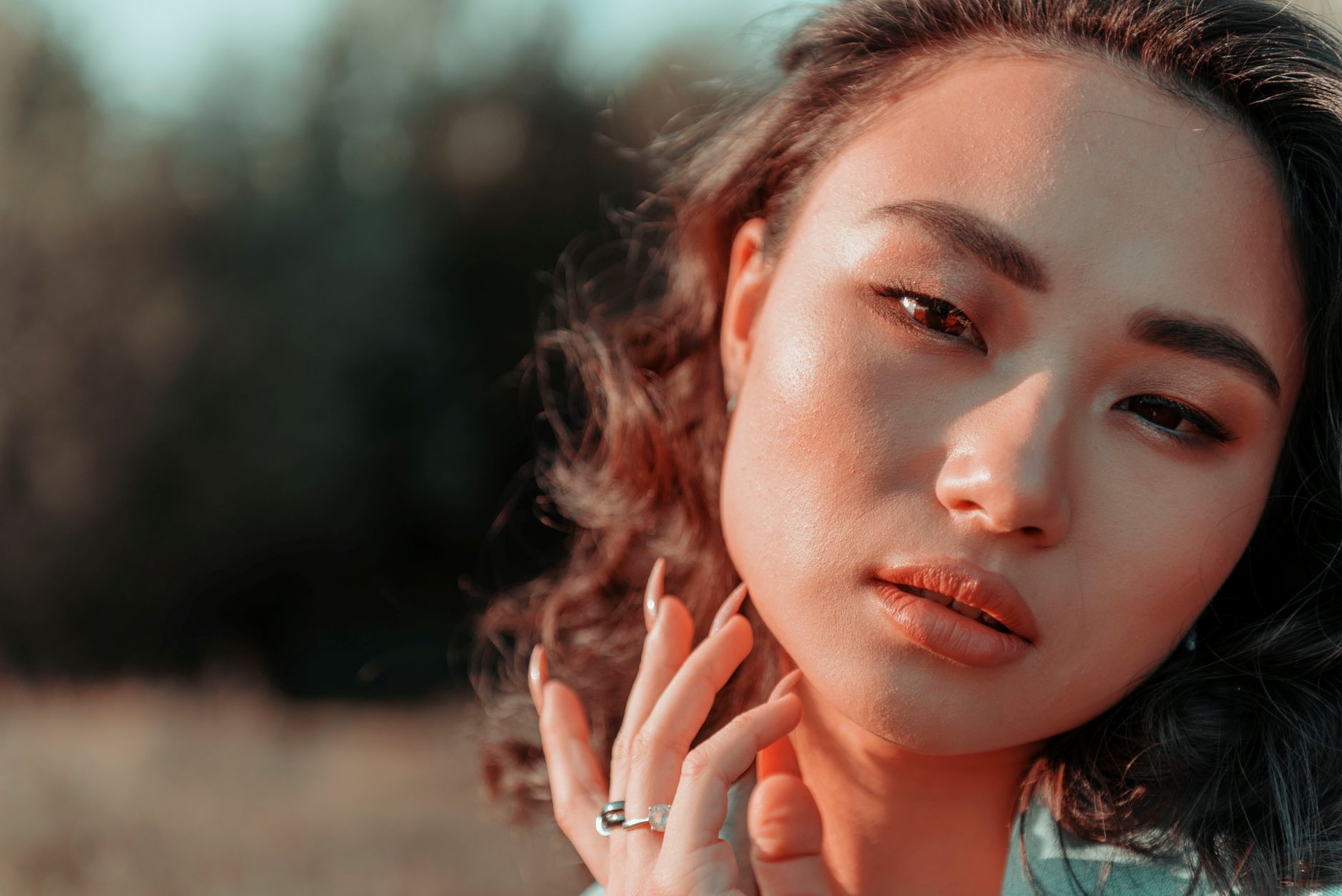
What undertones match glass skin across different skin depths?
Glass skin works on every skin depth—the trick is matching undertone and glow intensity to your natural colouring. Here's how we approach it:
- Warm undertones (golden, olive, honey): Use liquid hydrating foundations with warm yellow or golden undertones. Glow should be warm-toned highlighter (champagne, bronze-gold). On deeper skin, glass finish appears richer and more luminous than on fair skin, so we apply slightly more setting spray to lock radiance in place.
- Cool undertones (pink, rosy, red): Seek foundations with cool, pink-based undertones. Highlighter should be cool champagne or pearl. Avoid pink-leaning glow on darker skin as it can read ashy—instead use a softer champagne with a hint of gold undertone.
- Neutral undertones (balanced, grey-based): Foundations labeled "neutral" or "balanced" work; glow is cooler champagne. The beauty of neutral undertones is flexibility across lighting—matte and dewy both work.
A makeup trial is essential for glass skin, especially if you're a first-time client or have deeper or mixed undertones. During your trial, we swatch foundation on your jawline in daylight, check it under your phone camera (which mimics how others see you), and photograph the result. If you're doing group makeup or a bridal party, we trial each person individually because undertone and skin depth vary within a group. For mixed-race or deeper skin tones, we're experienced in avoiding ashy, mismatched, or flat-looking finishes—this is an area where many generic makeup artists fail. Book a 1-to-1 makeup class if you want to learn how to match your own undertone or learn glass skin techniques to practise at home.
What to check before you book your glass skin session
- Skin condition: Do you have active acne, eczema, or sunburn? Tell us in advance; glass skin emphasises skin texture, so we may recommend a different look or extra prep time.
- Primer and foundation sensitivities: Have you reacted to silicones or hyaluronic acid before? Share this when you message us on WhatsApp so we bring backup products.
- Venue and climate: Is your event outdoors, air-conditioned, or covered? Humidity and temperature vary (a rooftop garden in HCMC is hotter than an indoor hotel in Hanoi). Tell us so we adjust spray, powder, and touch-up kit.
- Timing and duration: Glass skin sessions run 45–60 minutes for one person; if you're part of a group, arrive early. We work through the bridal makeup checklist (or your event checklist) so you're camera-ready on time.
- Trial or same-day first appointment: If this is your first time with us, a paid trial is highly recommended, especially for glass skin or Korean-style makeup—it ensures no surprises on your actual event day.
- What to bring: Clean face (no old makeup), moisturised skin, a list of any product allergies, and your phone charger (photos take time and battery matters).
Plan your wedding-day look
How do humidity and heat affect glass skin makeup throughout the day?
Heat and humidity don't break glass skin if you prep and set correctly. In the first 2–3 hours, a well-applied look stays luminous because hydrating primer and foundation lock together. By hour 4–5, light sweat and natural oil begin to shift the finish—it may appear slightly more satin than glass-like, but glow remains. By hour 6–8, touch-ups become necessary unless you're in air-conditioning. We give you a compact touch-up kit (hydrating powder or cushion foundation and setting spray) so you can refresh in a bathroom or quiet corner—this takes 3 minutes and restores the glass finish for another 2–3 hours. If your event runs longer than 8 hours (e.g., a full wedding day with ceremony, photos, and reception), schedule a mid-event touch-up with us, or plan a 10-minute refresh between major moments. For outdoor events in Hanoi or Ho Chi Minh City, SPF-tinted hydrating primer adds extra UV protection without compromising glow.
What's the difference between glass skin and dewy skin makeup?
Glass skin and dewy skin are related but distinct. Dewy skin is moist, soft-focus, and approachable—it mimics healthy, hydrated skin. Glass skin is poreless, luminous, and reflective—it mimics treated or professional-grade skin. Both use hydrating primers and lightweight foundations, but glass skin requires precise undertone matching, matte-free setting (only hydrating or luminous sprays), and minimal imperfection-covering (because the point is to show flawless texture). Dewy skin is more forgiving—slight texture shows through and reads as natural. If you're unsure which suits your event, Korean-style makeup pages explore both aesthetics; during your trial or class session, we can show you both and let you decide. Many clients choose glass skin for photos and video (weddings, photoshoots, events) and dewy skin for everyday wear because glass skin is higher-maintenance over a full day.
Book on WhatsApp +84 338 762 340

FAQ
Can glass skin makeup work on oily or combination skin?
Yes, if you use a hydrating (not oil-control) primer and a lightweight, buildable foundation. The hydrating primer paradoxically absorbs excess oil better than matte primers because it doesn't trap sweat underneath. On combination skin, focus hydrating primer on dry zones and use a slightly more matte setting spray on the T-zone only. A trial is essential so we adjust the formula to your specific skin type and venue climate.
How long does a glass skin makeup appointment take?
A single-person glass skin session runs 45–60 minutes, including skin prep, primer, foundation, undertone matching, and setting. If you're booking bridal makeup or group makeup, add 20–30 minutes per additional person. We always arrive 15 minutes before the scheduled start to set up and hydrate your skin.
What's the best setting spray for glass skin in Vietnam heat?
Hydrating, alcohol-free setting sprays preserve glass finish and glow. Avoid silica-heavy or drying sprays—they flatten luminosity and accelerate breakdown in heat. During your makeup trial, we test spray longevity in the exact conditions of your event (air-conditioned venue vs. outdoor heat) so you see real results before your actual day.
Do I need a primer if I'm doing glass skin makeup?
Yes, primer is non-negotiable for glass skin in tropical climates. It creates the base for seamless, long-lasting glow and prevents foundation from separating or sliding. A hydrating primer is essential—it bonds hydration and foundation together, which matte primers cannot do. Without primer, glass skin fades within 3–4 hours in Hanoi or Ho Chi Minh City humidity.
Should I do a makeup trial for glass skin, or can I trust a single appointment?
A trial is strongly recommended, especially if this is your first time with us or if you have deeper skin, mixed undertones, or sensitive skin. Glass skin emphasises undertone match and finish precision—a trial ensures no surprises on your actual event day. Trials cost less than full appointments and save you stress and money on the day itself.
What products or habits should I avoid before a glass skin makeup session?
Avoid heavy exfoliation, active treatments (retinol, acids, vitamin C), and sunburn in the 3 days before your session. On the day, skip heavy creams, matte skincare, or primer—these block hydration and cause breakdown. Don't skip sunscreen in the morning, as SPF products help your base sit evenly. Also avoid arriving with old makeup on; let your skin breathe for at least 2 hours before our session.
Where are Cáo MakeUp's studios?
Cáo MakeUp has 6 studios across Vietnam: Hanoi: 11 Lien Tri, Hoan Kiem · 15A1 KDT Dai Kim, Hoang Mai · D02-L44 An Vuong, KDT Duong Noi; Ho Chi Minh City: A1.12 Ha Kieu Apartment, Street No. 20, An Nhon Ward, Go Vap; Da Nang: 108 Hoi Kieng 18, Ngu Hanh Son Ward; Hue: 63 Vo Duy Ninh, Thanh Thuy Ward, Hue. Hotline +84 865 239 183 · WhatsApp +84 338 762 340.
Book an artist
Tell us the city, the date, the occasion and how many people. We reply on WhatsApp in English with options and a quote.
FAQ
Can glass skin makeup work on oily or combination skin?
Yes, if you use a hydrating (not oil-control) primer and a lightweight, buildable foundation. The hydrating primer paradoxically absorbs excess oil better than matte primers because it doesn't trap sweat underneath. On combination skin, focus hydrating primer on dry zones and use a slightly more matte setting spray on the T-zone only. A trial is essential so we adjust the formula to your specific skin type and venue climate.
How long does a glass skin makeup appointment take?
A single-person glass skin session runs 45–60 minutes, including skin prep, primer, foundation, undertone matching, and setting. If you're booking [bridal makeup](/bridal-makeup) or group makeup, add 20–30 minutes per additional person. We always arrive 15 minutes before the scheduled start to set up and hydrate your skin.
What's the best setting spray for glass skin in Vietnam heat?
Hydrating, alcohol-free setting sprays preserve glass finish and glow. Avoid silica-heavy or drying sprays—they flatten luminosity and accelerate breakdown in heat. During your makeup trial, we test spray longevity in the exact conditions of your event (air-conditioned venue vs. outdoor heat) so you see real results before your actual day.
Do I need a primer if I'm doing glass skin makeup?
Yes, primer is non-negotiable for glass skin in tropical climates. It creates the base for seamless, long-lasting glow and prevents foundation from separating or sliding. A hydrating primer is essential—it bonds hydration and foundation together, which matte primers cannot do. Without primer, glass skin fades within 3–4 hours in Hanoi or Ho Chi Minh City humidity.
Should I do a makeup trial for glass skin, or can I trust a single appointment?
A trial is strongly recommended, especially if this is your first time with us or if you have deeper skin, mixed undertones, or sensitive skin. Glass skin emphasises undertone match and finish precision—a trial ensures no surprises on your actual event day. Trials cost less than full appointments and save you stress and money on the day itself.
What products or habits should I avoid before a glass skin makeup session?
Avoid heavy exfoliation, active treatments (retinol, acids, vitamin C), and sunburn in the 3 days before your session. On the day, skip heavy creams, matte skincare, or primer—these block hydration and cause breakdown. Don't skip sunscreen in the morning, as SPF products help your base sit evenly. Also avoid arriving with old makeup on; let your skin breathe for at least 2 hours before our session.
Where are Cáo MakeUp's studios?
Cáo MakeUp has 6 studios across Vietnam: Hanoi: 11 Lien Tri, Hoan Kiem · 15A1 KDT Dai Kim, Hoang Mai · D02-L44 An Vuong, KDT Duong Noi; Ho Chi Minh City: A1.12 Ha Kieu Apartment, Street No. 20, An Nhon Ward, Go Vap; Da Nang: 108 Hoi Kieng 18, Ngu Hanh Son Ward; Hue: 63 Vo Duy Ninh, Thanh Thuy Ward, Hue. Hotline +84 865 239 183 · WhatsApp +84 338 762 340.
More like this
Korean-style makeup
Korean Style Makeup with False Lashes or Not: A Real Guide
Korean makeup can look stunning with or without false lashes—it depends on your eye shape, event, and climate. We share the honest framework.
Korean-style makeup
Korean Style Makeup Hanoi for Foreigners: Studio Guide & Booking
Korean-style makeup in Hanoi demands climate-proof application and undertone matching for mixed and deeper skin. We offer consultation, trials, and on-location sessions at three Hanoi studios.
Korean-style makeup
Korean Makeup Artist in Tay Ho for Foreigners: Book Bridal & Shoot Makeup
Finding a Korean makeup artist in Tay Ho who understands Western and mixed skin tones isn't simple—heat, humidity, and undertone mismatch derail most bookings. Cáo MakeUp's team works with international clients across Hanoi, using climate-proof techniques and bilingual consultations to deliver Korea